
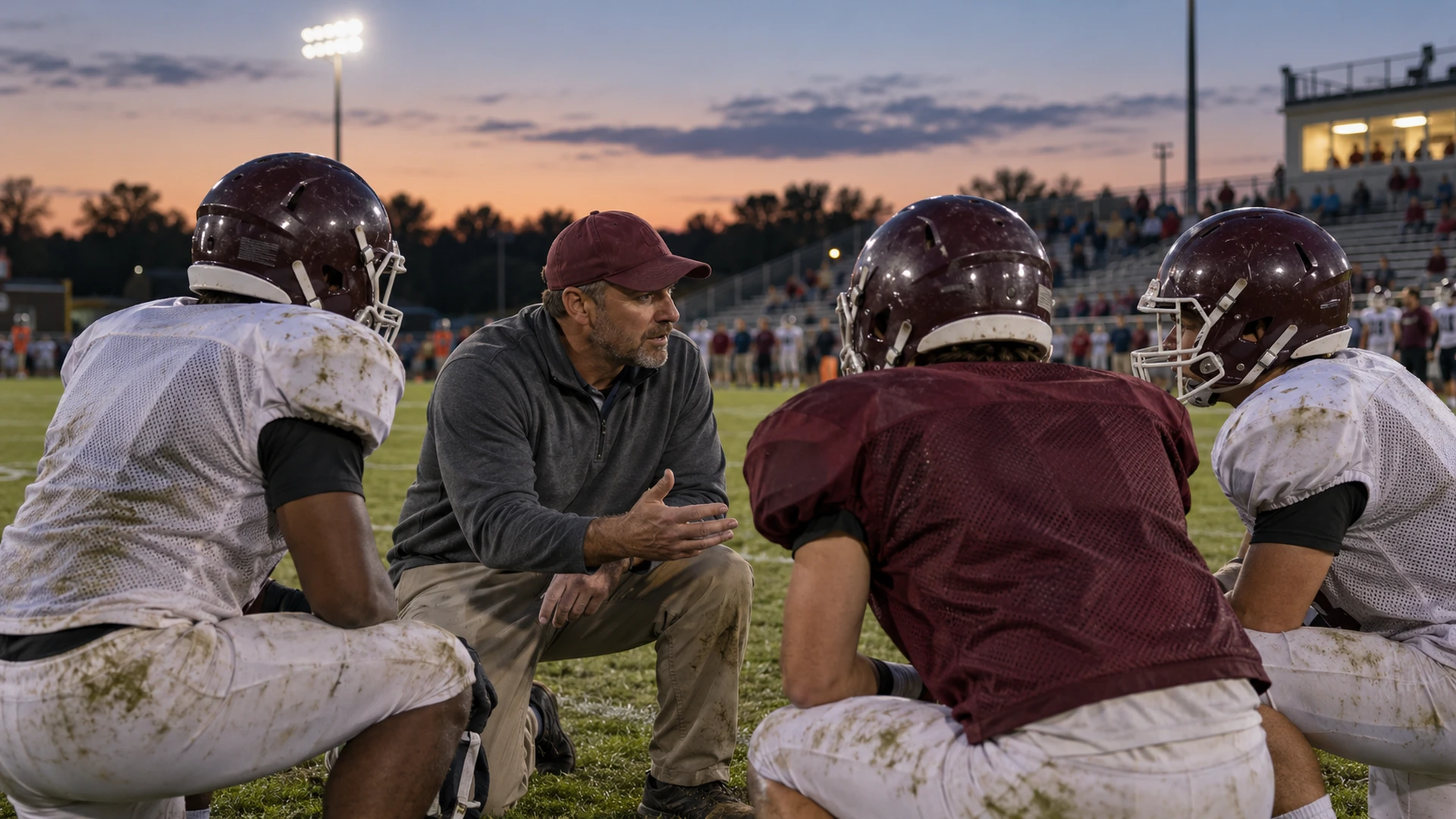
Picture a player carrying a mistake into the next rep: eyes down, missed instructions, another error. One mistake can turn into a whole series of lost focus. Telling them to “shake it off” gives them little to act on.
Coaching mental toughness in sports means giving athletes a response they can rehearse. Build the next-play routine before game day. This guide brings together six drills, short sideline scripts, an informal observation rubric, and a flexible six-week plan to adapt to your team.
This post contains Amazon affiliate links. If you purchase through them, I may earn a commission at no extra cost to you. As an Amazon Associate, I earn from qualifying purchases. Affiliate Disclosure.
Table of Contents
- What Mental Toughness Coaching Actually Is (and Isn’t)
- Can It Actually Be Taught?
- Spot the Weak Links: A Coach’s Observation Rubric
- The Coach’s Role: Modeling and Scripts
- Coaching Emotional Intelligence: The Modern Reality
- Find Your Best Drill
- The Core Drills: 6 Ready-to-Run Mental Toughness Sessions
- Building It Into Your Season Without Burning Out Your Team
- Your 6-Week Starter Plan
- Explore the Wider Coaching Program
- Frequently Asked Questions
For the broader psychological framework behind these practice routines, see the coaching mindset guide. It connects confidence, motivation, and the environment a coach creates.
What Mental Toughness Coaching Actually Is (and Isn’t)
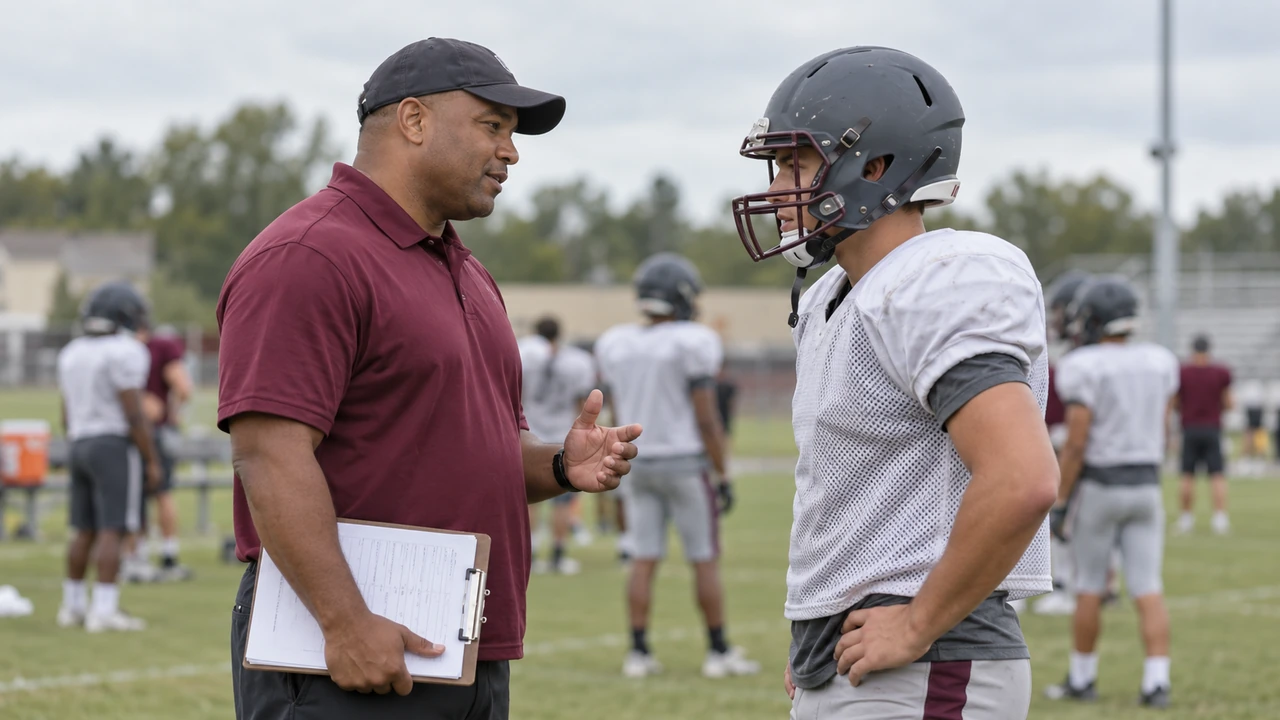
“Shake it off” is not a reset routine. Coaching mental toughness means teaching a specific response an athlete can practice, rather than yelling louder, assigning punishment laps, or handing out an unexplained worksheet.
A useful working definition is an athlete’s ability to stay focused, confident, and composed under pressure, and to recover after a mistake. It’s not a personality trait some kids are born with. It’s a set of trained responses, and coaches build it through the environment they create and the behaviors they model.
The reason this matters for your specific situation: coaches who run pressure drills, hold standards after turnovers, and require players to finish hard reps are already doing this kind of work. They just don’t have the language for it. What follows is mostly precision and intention added to what you already do, not a reinvention of how you coach.
Before going further, here’s the distinction that most coaches are fuzzy on — because parents and athletic directors will ask. The 4Cs framework from sports psychology research (Clough & Earle) identifies Control, Commitment, Challenge, and Confidence as the four trainable components of mental toughness. It’s one of the most widely used frameworks in the field, and it maps cleanly onto what good coaches already do instinctively.
| Concept | What It Means | Football Example |
|---|---|---|
| Mental Toughness | Staying composed and competitive under pressure; bouncing back fast | JV QB throws a pick, immediately calls the next play with the same voice — doesn’t sulk |
| Resilience | Long-term recovery after setback, failure, or adversity | Player loses starting spot mid-season, works harder, earns it back by playoffs |
| Emotional Intelligence (EI) | Ability to recognize, understand, and manage emotions in self and teammates | Captain notices a teammate spiraling after a bad call, says the right thing before the next snap |
All three matter. They overlap. But mental toughness is the most coachable in-season, because it lives in practice design and coaching behavior, not in counseling sessions or long-term personal development work. It’s worth distinguishing it from grit and growth mindset too: grit is a long-term persistence trait; growth mindset is a belief about ability. Mental toughness is neither — it’s a set of trained in-game responses that you can build inside a single season.
Can It Actually Be Taught?
Yes — and the mechanism is important to understand. Mental toughness isn’t built through speeches. It’s built through repeating the same controlled responses to pressure until they become automatic — with you providing specific cues when athletes fail or check out.
The 4Cs model identifies four trainable components: Control (managing emotions and environment), Commitment (staying on task through difficulty), Challenge (treating adversity as opportunity), and Confidence (belief in ability and interpersonal assertiveness). Every drill and coaching behavior in this article maps onto one of these. You don’t need to know the research — you just need the practical layer.
Spot the Weak Links: A Coach’s Observation Rubric
Before you can build mental toughness, you need to see it. Use this rubric at your next practice — it takes about 10 minutes to run through your roster mentally after a tough session.
| Behavior to Observe | 1 — Needs Work | 3 — Developing | 5 — Strong |
|---|---|---|---|
| Response to mistakes | Sulks, disengages, won’t make eye contact | Recovers in 2–3 plays | Resets immediately, calls next play |
| Body language under pressure | Head down, slouched, slow to huddle | Inconsistent — varies by situation | Upright, in huddle fast, eye contact with QB/captain |
| Effort when losing | Soft contact, avoids confrontation | Tries harder in spots but fades | Competes same regardless of score |
| Response to bad calls | Argues, blames ref, loses focus | Visible frustration but gets back in line | Doesn’t react — locks in on next play |
| Emotional control in huddle | Argues with teammates, blames others | Stays quiet — neither helping nor hurting | Calm voice, focused, doesn’t pile on |
| Communication about readiness | Needs reassurance to report concerns or ask for a pause | Reports concerns when prompted | Clearly reports pain, symptoms, fatigue, or a need for help |
| Focus during down time | Drifts, side conversations, unfocused eyes | Returns to focus when reminded | Self-manages attention between plays |
| Response to pressure drills | Tightens up, errors increase under stakes | Performs close to normal | Performs same or better when it matters |
Use these ratings as informal coaching observations, not a validated test, diagnosis, or selection cutoff. Look for patterns across practices, ask the athlete what they are experiencing, and choose one supportive cue to practice together. Eye contact, quietness, and body language vary between athletes; they do not establish effort or mental health. Reporting pain, illness, or needing rest is responsible communication.
The Coach’s Role: Modeling and Scripts
Here’s the part most coaching books skip: if you lose your composure after a bad call, your athletes will too. Coaching mental toughness is partly about the environment you create, and you are the biggest variable in that environment.
Sports performance coaching at the elite level focuses heavily on pressure-performance routines and focus under fatigue — and coaches are explicitly trained in how their own reactions shape athlete responses. At the youth level, nobody tells you this. So let me be direct: the athletes who fold in the fourth quarter are often mirroring what they see on the sideline.
What you model matters more than any drill. Here’s the specific language that builds mental toughness versus the language that quietly destroys it:
| Situation | What Most Coaches Say | Mental Toughness Coaching Version |
|---|---|---|
| After a turnover | “How did you miss that? What are you doing out there?” | “That’s done. Next play. Line up and go.” |
| After a blown lead | “We had this game! What happened to you guys?” | “Score doesn’t change how we play the next series. What’s our job right now? Let’s do that job.” |
| When a player’s head drops | “Get your head up! Shake it off!” | “[Name]. Look at me. That mistake is already behind you. I need you right here, right now. Can you do that?” |
| After a bad call | Arguing with the official, visible frustration | Turn to your players, make eye contact, hold up one finger: “Next play. That’s it. Next play.” |
| After an injury timeout | “Come on, we need you in there — shake it off.” | “Tell us what happened. We will follow the medical and return-to-play process.” Bring in the appropriate medical support and communicate clearly to the backup; an athlete feeling ready is not medical clearance. |
When an athlete is stuck on a mistake, acknowledge what happened. Give the athlete one clear next task. “That’s done. Next play. Line up.” can be enough. Give the player room to respond; a longer speech is not always more useful.
Mind Gym — 40 lessons for the mental side of sport.
Gary Mack and David Casstevens combine athlete stories with mental-skills exercises. Choose this broader sports-psychology read when you want more examples for coaching conversations; use the six drills below when you need a practice session to run today.
Prefer to compare different approaches first? See the sports psychology books for coaches.
Coaching Emotional Intelligence: The Modern Reality
If you haven’t had a parent or athletic director ask you about “emotional intelligence” in the last two years, you will. Post-2020, parents are watching how coaches handle player emotions differently than they were five years ago. Some of it is overreach — but the underlying ask is legitimate.
Coaching emotional intelligence doesn’t mean you become a therapist. It means you teach athletes three practical skills: recognize when their own emotions are affecting their performance, have a go-to reset behavior that interrupts the spiral, and read when a teammate needs support versus space.
Here’s what that looks like at the line of scrimmage: your center snaps the ball wrong twice in a row, head drops, jaw tightens. Your captain is two feet away. The right move isn’t a speech — it’s a hand on the shoulder pad, eye contact, and three words: “I’ve got you.” That’s EI coaching in action on a football field. It’s a trained response, not a personality type.
Self-regulation scripts to teach athletes directly:
The Reset Breath (30 seconds, works anywhere): “When you feel yourself starting to spiral (chest tight, jaw clenched, focusing on the last play) — take one long breath in through the nose (four counts), hold two counts, out through the mouth four counts. Then say to yourself: ‘Next play.’ That’s your reset. Practice it here so it’s automatic when it matters.”
Reading a teammate (captain/leadership training): “When you see a teammate with their head down, don’t give them a speech. One hand on the shoulder pad, make eye contact, say: ‘I’ve got you.’ That’s it. Move on. You’re not their therapist — you’re their teammate. Keep it short, keep it physical, keep it present.”
Simple check-ins give teammates a way to offer support without taking over the conversation. Adapt the cue to the athlete: some prefer a brief verbal check-in, while others need space. The guide to communication skills for coaches covers the wider work of listening, feedback, and handling team tension.
Find Your Best Drill
Choose an age group and a challenge to see one starting drill and an age-specific coaching cue.
Find one routine to try
The Core Drills: 6 Ready-to-Run Mental Toughness Sessions
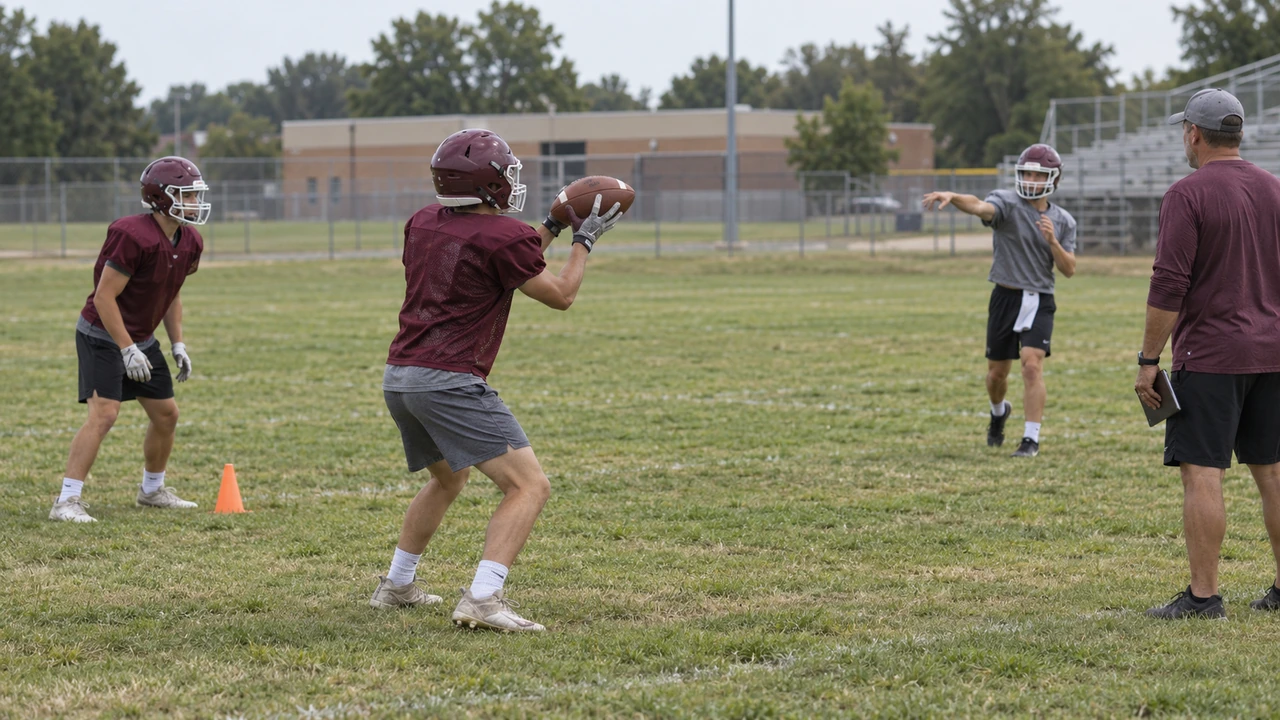
Mental toughness is not permission to ignore pain. Use age-appropriate, non-contact versions of these activities, with normal rest and unrestricted water access. Stop for pain, dizziness, unusual weakness, or suspected injury and follow your school or league’s medical procedures. CDC HEADS UP advises removing an athlete when concussion is suspected and leaving return-to-sport decisions to a healthcare provider. Follow CDC heat guidance and local practice restrictions; mental toughness never means ignoring symptoms.
The tool above gives you a quick personalized starting point. The finder recommends four starting points; the complete six-drill library below adds two more options to use as the season goes on. Each fits inside a standard 60-minute football practice and is built on a specific 4C component. Start with one drill, not all six. The Mistake Reset Circuit and Accountability Huddle are low-setup starting options; adapt them to the group rather than assuming every athlete responds the same way. For a larger drill library, see the mental toughness coaching toolkit.
Drill 1: The Mistake Reset Circuit — 10 min, full team. 4C component: Control.
Run a standard passing or route drill. Every time a player makes an error (drop, wrong route, missed assignment), they must execute a visible reset behavior before the next rep: two claps, a breath, and a verbal “next play.” Let the next athlete continue while the player takes a brief reset, with a quiet cue from you if needed. Coaching cue: “The reset is the skill, not the drill. We’re practicing the response, not avoiding the mistake.” Offer a brief reset the athlete can use comfortably; avoid making them perform an emotion for the team. Age variation (12–14): simplify to one clap + “I’m ready.”
Drill 2: The Pressure Last Rep — 8 min, full team. 4C component: Confidence + Challenge.
Choose one short, non-contact drill for a final “money rep.” Use a clear process target and a pretend game score to create mild pressure. Practice ends at the planned time regardless of the result; mistakes never earn extra conditioning. Coaching cue: “This is the one that counts. Same as the first rep. Breathe. Set. Go.” After execution: “That’s the version you want in the fourth quarter” or “Note what happened to your technique under pressure: that’s what we’re fixing.” Age variation: for younger groups, simplify the target and celebrate a clear call or a calm reset. Water, rest, and permission to stop are always available, never rewards to earn.
Drill 3: The Adversity Series — 12 min, offense vs. defense units. 4C component: Challenge + Commitment.
Run a scripted 7-on-7 with stacked adversity. Offense starts down 6, second-and-long, following a simulated turnover. Add one variable mid-series (injury timeout, controversial call, noise from the sideline) with no warning. Coaching cue: stop play only to name mental toughness behaviors in real time. Narrate the mental game out loud. Age variation: for 12–14, keep the adversity scripted and predictable the first few times — one variable only.
Drill 4: The Fatigue Focus Drill — 10 min, full team in groups of 4. 4C component: Control + Confidence.
Use ordinary age-appropriate movement followed by a normal recovery break, then a short non-contact passing or snap-count task. Check that athletes feel ready and can maintain technique; do not deliberately exhaust them or add contact under fatigue. Coaching cue: “Check how you feel. Tell me if you need a break. When you are ready, take a comfortable breath and choose one cue.” Stop for pain, dizziness, unusual weakness, illness, or deteriorating technique. Age variation: keep movement light and instructions simple for younger groups.
Drill 5: The Locked In Window — 8 min, full team. 4C component: Commitment.
Three minutes of absolute silence and visualization before a key practice segment. Coaches don’t speak. Players stand on the line and visualize their specific assignment executing perfectly. Then, on your signal, full execution at game speed. Coaching cue before silence: “Three minutes. You’re seeing yourself execute your assignment. Not the whole team — yours. Your footwork. Your call. Your finish.” Age variation: for 12–14, reduce to 90 seconds and give a specific image prompt.
Drill 6: The Accountability Huddle — 5 min, full team. 4C component: Commitment + Control.
End of practice. Select two moments from that session: one where mental toughness showed up, one where it broke down. Name both specifically and objectively — no shaming. Ask two players to say one word each describing what the team needs in the breakdown moment. That word becomes the week’s mental focus. Coaching cue: “I’m not looking for the right answer. I’m looking for what’s true.” Keep your tone neutral and specific. Age variation: for younger groups, provide two options (“focus” or “reset”) rather than open-ended.
Building It Into Your Season Without Burning Out Your Team
The reality in 2026 is that parents and athletic directors are watching for burnout signals. An athlete constantly pushed mentally without recovery time, without positive reinforcement of growth, won’t become tougher. They’ll become anxious or shut down entirely. Mental strength coaching is built on accumulated small wins, not constant pressure.
Two things protect against this. First, name it when you see it: “That reset right there? That’s what we’ve been building since Week 2. You just did it automatically.” Second, periodize the mental load the same way you periodize physical conditioning. High-pressure simulation weeks should alternate with consolidation weeks where pressure is lower and reinforcement of what’s working is higher.
Your 6-Week Starter Plan
The following example gives each week one focus, one primary drill, and one huddle script. Adapt the sequence to the season, practice load, and athletes; move more slowly or revisit a routine when needed.
| Week | Mental Focus | Primary Drill | End-of-Practice Huddle Script |
|---|---|---|---|
| Week 1 | Introduce the reset habit | Mistake Reset Circuit | “Every mistake has a reset. This week, we practiced the reset. Now it’s yours. Use it.” |
| Week 2 | Performing under stakes | Pressure Last Rep | “The last rep is the real rep. That’s not a drill rule — that’s a game truth. You proved you can do it.” |
| Week 3 | Competing through adversity | Adversity Series | “The ref is going to make bad calls. The scoreboard is going to be wrong sometimes. What stays constant is how we play the next snap.” |
| Week 4 | Focus under fatigue | Fatigue Focus Drill | “Check your body, report concerns, and take the recovery you need. When ready, use one clear cue for the next task.” |
| Week 5 | Pre-snap mental lock | Locked In Window | “Elite performers don’t wait for the big moment to get locked in. They practice it. You just did.” |
| Week 6 | Team accountability | Accountability Huddle | “Mental toughness isn’t just yours. It’s ours. When one of you resets, it gives the guy next to you permission to reset. That’s what a team looks like.” |
After Week 6, go back to your observation rubric and run it again on the same players you scored at Week 1. Look for changes in the behaviors you practiced, without assuming everyone will improve on the same timetable. Track it, name it, build on it. One honest note: some players won’t show meaningful change in six weeks, and that’s normal. The athletes whose mental game moves fastest are usually the ones who were already trying — the disengaged kid who doesn’t buy in yet is a longer project.
Explore the Wider Coaching Program
The mindset, drill-toolkit, and communication guides linked above go deeper on the mental-skills work. If putting a routine into practice raises a wider program question, choose the guide that matches it:
- Choosing practical training tools? The football drill equipment guide covers equipment choices for a youth program.
- Developing other coaches as well as athletes? Explore NFL coaching trees for examples of how systems and coaching approaches pass between staff.
- Working toward a team-coaching role? The guide to starting a football coaching career covers the pathway into that role.
Frequently Asked Questions
Conclusion
Mental toughness coaching isn’t a separate program you add on top of your existing practice. It’s how you run the practice you already have. The coaches who build the most resilient athletes aren’t necessarily the toughest or the most experienced. They’re the ones who know what to say in the moment a player’s head drops, and who practice those responses with the same discipline they bring to everything else.
This educational guide draws on sports-psychology frameworks and example coaching activities; it does not document personal team-coaching experience or provide clinical assessment or treatment. Every athlete responds differently — if you’re working with a player who shows signs of significant anxiety, depression, or mental health challenges beyond normal competitive pressure, connecting them with a school counselor or mental health professional is the right call. Coaching mental toughness and supporting mental health are not the same thing, and knowing the difference is part of good coaching.